-924_Tryyourself-Apparel-Ad-ActivationPhase6.pngyh8y.png)
For most print service providers, the hardest part of print on demand has never been printing. It has been listing. Every new merchant brings a new catalog, every catalog needs mockups across sizes, colors, and placements, and every variant needs a title, a description, and validated artwork before it can go live on a storefront. AI product listing POD is the category that has moved fastest in the past 18 months, and in 2026 the ceiling has been lifted further than in almost any other part of the workflow. The AI-powered product onboarding engine on GelatoConnect can ingest and map 300,000 products in roughly 4.5 hours. The AI mockup generator produces professional variations in under 2 minutes. That shift changes what a PSP can realistically take on.
Why listing has been the hardest part of POD
Production capacity has rarely been the constraint most PSPs hit first. The constraint has been the ramp from "new merchant signed" to "merchant's catalog live and selling." Every product needs a mockup for every color, every size range, and every print placement. Every listing needs copy that reads well and ranks well. Every artwork file needs validation for print size, color profile, and transparency. Multiply that by a few hundred SKUs per merchant, and by dozens of merchants per quarter, and onboarding becomes the slowest part of the business.
That bottleneck has historically absorbed people, time, and margin in ways that production teams could never recover. It is also the stage where errors compound, because a mislabeled variant or a broken mockup follows the product all the way to the customer.
What modern AI listing does in practice
AI product listing POD is not a single feature. It is a set of capabilities that work together to collapse onboarding from weeks to minutes.
Bulk catalog ingest via CSV, JSON, or direct store connection
The first step is getting the merchant's catalog into the system. Modern onboarding accepts structured files (CSV, JSON) or connects directly to the merchant's storefront. The system reads product structure, variant logic, and metadata, and maps it to the PSP's production catalog without manual re-entry.
Automatic mockup generation across garment colors, sizes, and placements
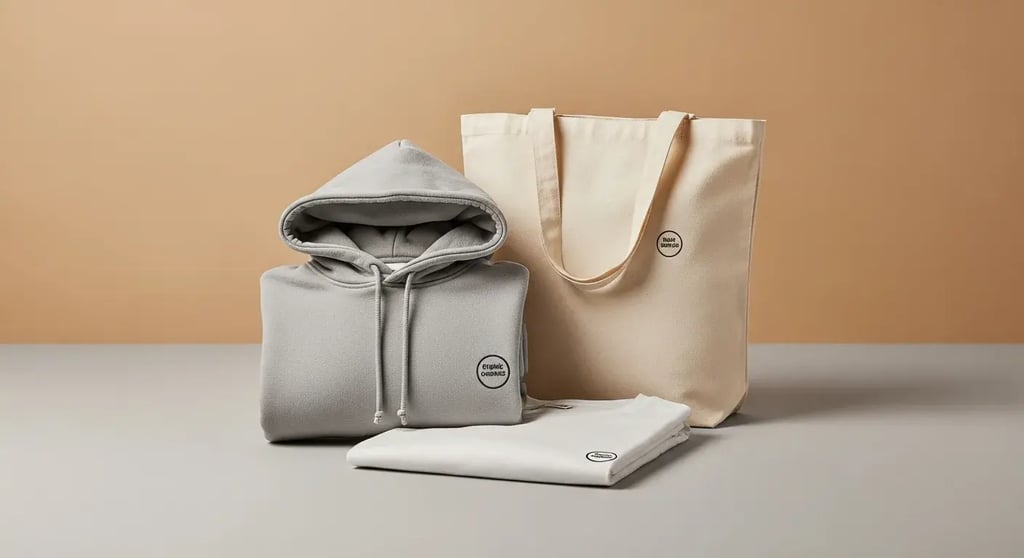
Once the catalog is mapped, the AI mockup generator produces variants for every color, every size, and every placement in under 2 minutes per product. That includes front, back, sleeve, and pocket placements where relevant, with accurate rendering of fabric texture and drape.
Auto-generated product titles, descriptions, and SEO-friendly variant labels
Listings need copy, and copy needs structure. The system generates product titles, descriptions, and variant labels that follow channel-specific SEO conventions. Output can be reviewed in bulk, edited in line, and approved before publishing.
Artwork validation (print-size, color profile, transparency) before the listing goes live
The most expensive errors in POD are artwork errors that only surface at production. AI validation checks print size, color profile, transparency, and DPI before the listing is ever published. Files that fail validation are flagged with specific remediation steps rather than silently breaking downstream.
Channel-specific publishing to Shopify, Etsy, WooCommerce, Amazon, and TikTok Shop
Each channel has its own listing schema, its own image requirements, and its own category taxonomy. The system publishes to Shopify, Etsy, WooCommerce, Amazon, and TikTok Shop in the format each channel expects, and keeps inventory and metadata synchronized from that point forward.
The 30-minute listing playbook
Here is what the end-to-end flow looks like for a PSP onboarding a new merchant catalog in 2026.
- Minute 0 to 5, connect the merchant's store. One-click auth connects the merchant's Shopify, Etsy, WooCommerce, Amazon, or TikTok Shop account. The system pulls the existing catalog structure.
- Minute 5 to 10, map the merchant's product catalog to the PSP's production catalog. The AI matches the merchant's SKUs to the PSP's available products, materials, and decoration methods. Unmatched items are flagged for manual review.
- Minute 10 to 15, generate AI mockups for every variant. The mockup generator produces all color, size, and placement variations. Ops reviews the batch in a grid view and approves or regenerates individual items.
- Minute 15 to 25, bulk publish listings to target channels. The system pushes listings to each connected channel in the correct format. Titles, descriptions, and variant labels populate automatically.
- Minute 25 to 30, spot-check the first 20 listings and approve. A quick audit on each channel confirms that images render correctly, variants are linked, and pricing is correct. The remaining listings publish on approval.
That is the baseline. A PSP can realistically onboard a mid-sized merchant catalog in a single working half-hour instead of a two-week sprint.
Customer proof: Imperial Custom Apparel
Imperial Custom Apparel ran onboarding the hard way. Listing products took 1 to 2 hours each, and the team needed 17 people to keep pace with demand. After moving to AI-powered listing on GelatoConnect, the same workflow runs with 3 people, pushes 300 products per day through to storefronts, and takes 5 to 10 minutes per listing. That is a 95 percent reduction in listing time. The business has also saved over 250,000 USD in software costs by consolidating the listing, mockup, and publishing stack onto one platform.
The structural change matters more than the numbers in isolation. The 14 people who are no longer tied up in listing work are now focused on merchant acquisition, customer service, and production quality. The output ceiling moved, and the team's center of gravity moved with it.
Common mistakes to avoid
AI listing does not remove the need for judgment. A few patterns still sink otherwise-good onboarding flows.
- Skipping the catalog mapping review. Automated mapping is accurate, but unmatched SKUs need a human call. Leaving unmatched items in the queue creates silent gaps in what the merchant can actually sell.
- Trusting mockups without a color check. AI rendering is close to photographic, but brand-critical garment colors should be sampled against a production swatch before scale.
- Publishing to all channels at once on day one. Publish to the merchant's primary channel first, confirm end-to-end fulfillment on a small order volume, and then fan out.
- Ignoring channel-specific copy rules. Amazon, Etsy, and TikTok Shop each reward different title structures. The system generates compliant copy, but ops should verify that category-specific rules are applied.
- Treating onboarding as a one-time event. Merchant catalogs change. Build a cadence for re-running validation and refreshing mockups when products or artwork are updated.
What to measure
The PSPs that scale onboarding the fastest track a tight set of operational metrics rather than a long report.
- Time per listing, end to end. From catalog ingest to published listing. The target is minutes, not hours.
- Products published per day, per person. This exposes whether the team is scaling with automation or still bottlenecked on manual steps.
- Artwork rejection rate. How often files fail validation on the first pass. A low rate means merchants are sending clean files, and a high rate means the system is catching problems before production.
- First-order defect rate by channel. The true quality measure is what customers receive. Track it by channel to catch channel-specific rendering or sizing issues early.
- Software cost per merchant onboarded. Consolidating listing, mockup, and publishing on one platform is where the largest cost line moves.
Why AI product listing POD is the new baseline
Two years ago, AI product listing POD was a differentiator. In 2026 it is the baseline. Merchants expect their catalogs to be live in hours, not weeks. Channels expect clean, compliant, SEO-ready copy. Customers expect mockups that match what arrives in the box. A PSP that still runs onboarding as a manual process is competing at a structural disadvantage, regardless of how good its printing is.
The lift is less about swapping tools and more about rebuilding the workflow around what AI can now do reliably. The teams that move first get the capacity to take on more merchants, the margin to invest in quality, and the operational clarity to scale without scaling headcount in parallel.
Explore GelatoConnect
- GelatoConnect Store Link: E-Commerce: see how the product works end to end.
- When merchants outgrow POD plugins: bolt-on to native production
- See GelatoConnect in action: walk through the platform live.
Frequently asked questions
How fast can AI product listing onboard a new POD catalog?
A PSP can onboard a mid-sized merchant catalog in 30 minutes end to end: connect the store in minutes 0 to 5, map the catalog in 5 to 10, generate AI mockups in 10 to 15, bulk publish to channels in 15 to 25, and spot-check the first 20 listings in 25 to 30. On the GelatoConnect platform, 300,000 products can be mapped in roughly 4.5 hours.
How fast are AI-generated POD mockups in 2026?
The AI mockup generator produces professional variations in under 2 minutes per product, including front, back, sleeve, and pocket placements where relevant, with accurate rendering of fabric texture and drape across every garment color and size.
Which channels can AI POD listing publish to?
Shopify, Etsy, WooCommerce, Amazon, and TikTok Shop on the B2C side, each with channel-specific listing schemas and image requirements. The platform then keeps inventory and metadata synchronized automatically from that point forward.
What outcomes does AI product listing deliver at scale?
Imperial Custom Apparel went from 17 people and 1 to 2 hours per listing to 3 people publishing 300 products per day at 5 to 10 minutes per listing, a 95 percent reduction in listing time. They also saved over 250,000 USD in software costs by consolidating listing, mockup, and publishing on one platform.
What should PSPs measure when scaling AI-driven listings?
Five metrics: time per listing end to end, products published per day per person, artwork rejection rate on first pass, first-order defect rate by channel, and software cost per merchant onboarded. The combination exposes whether the team is scaling with automation or still bottlenecked on manual steps.
What are the common mistakes in AI-driven POD listing?
Skipping the catalog mapping review for unmatched SKUs, trusting mockups without a production color check against a physical swatch, publishing to all channels at once on day one, ignoring channel-specific copy rules, and treating onboarding as a one-time event rather than an ongoing cadence when merchant catalogs change.