
Print service providers (PSPs) are some of the most resourceful businesses around. Every day, they balance people, machines, storefronts, and clients under high pressure. Many have invested heavily in new tools and platforms to stay competitive in a fast-changing market.
And yet, even the most capable PSPs often find themselves caught in complexity creep. Instead of simplifying operations, their software stacks gradually become a patchwork of disconnected systems, manual workarounds, and hidden inefficiencies.
In Episode 1 of Unjammed: The Software Strategy Series for Print Leaders, we explored why this happens — and how PSPs can approach the challenge differently. This blog expands on that conversation, drawing on industry voices, survey insights, and practical steps to make complexity more manageable.
How Complexity Creeps InRick Bellamy, a veteran in graphics technology who has worked with PSPs around the world, put it simply:
“Operations still feel slow, messy, and manual. Tools multiply over time — often as temporary fixes — but those ‘patches’ become permanent, and your system turns fragile.”
For most PSPs, complexity isn’t the result of bad decisions. It’s the natural outcome of growth and adapting quickly to customer needs:
-
Layering of tools over time. A single MIS grows into six systems plus spreadsheets, plugins, and scripts.
-
Temporary fixes that stick. A spreadsheet for inventory or a plug-in for shipping solves an urgent need — and ends up staying in place for years.
-
Evolving customer requirements. Aggregators, e-commerce platforms, and global brands demand direct integrations and rapid turnarounds.
The intent is always to keep business moving. But over time, the stack can become harder to manage and less resilient.
What Complexity Looks Like Day-to-Day
Many leaders describe a familiar story:
-
A MIS worked well for estimating jobs a few years ago.
-
Inventory wasn’t mobile-friendly, so the team added spreadsheets.
-
Shipping grew more complex, leading to one, then two, separate tools.
-
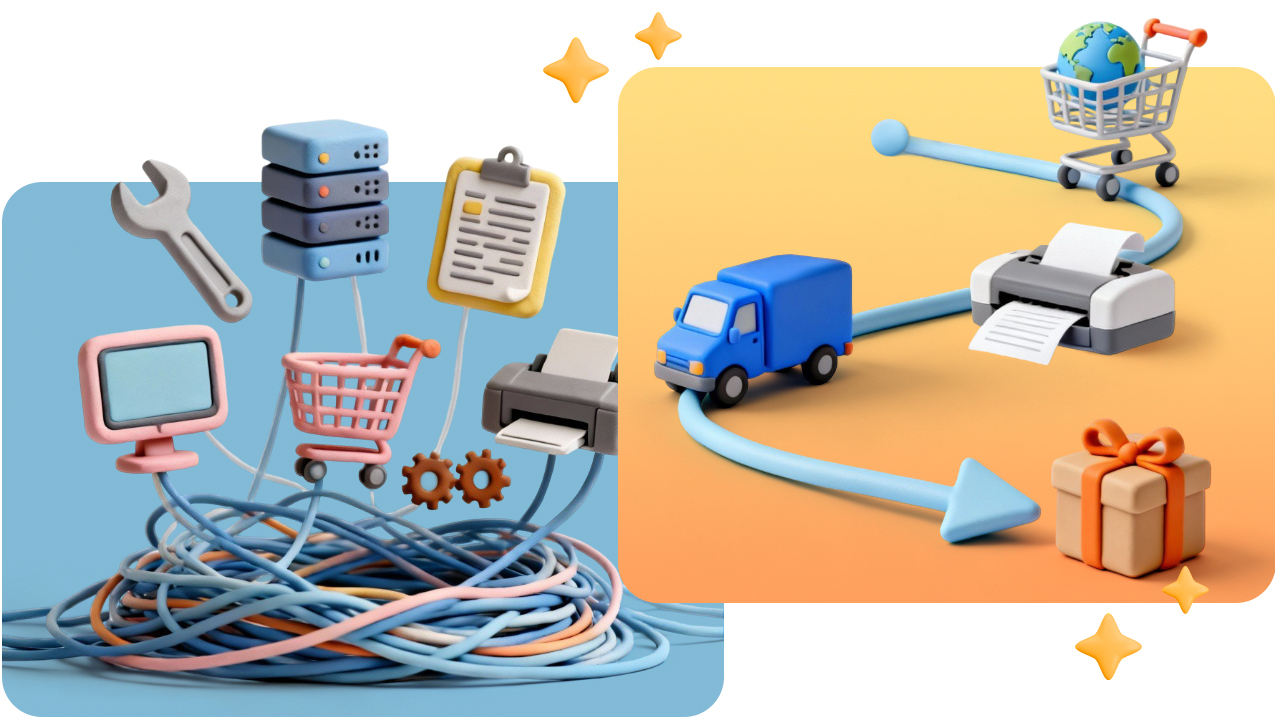
Web-to-print storefronts came online but didn’t integrate with MIS, so staff re-entered every order.
Individually, each addition made sense. Together, they created a fragile system with too many handoffs. Staff spent time rekeying data, updating multiple systems, and reconciling conflicting reports — while costs rose and profitability stayed flat.
When It Becomes Impossible to Ignore
Most PSPs can live with some inefficiency. But there comes a point where complexity becomes a barrier to growth. Signs include:
-
Customer onboarding slows down. Adding a new client takes weeks or months because systems can’t connect smoothly.
-
Headcount grows in step with revenue. Instead of scaling margins, every new customer seems to require new hires.
-
Reporting conflicts cause delays. Teams debate which system is “correct,” making it harder to act quickly.
These are not failures — they’re signals that the tools that once worked well are now stretched too thin.
Common Signals Your Stack Is Struggling
From Episode 1, three patterns came up again and again:
-
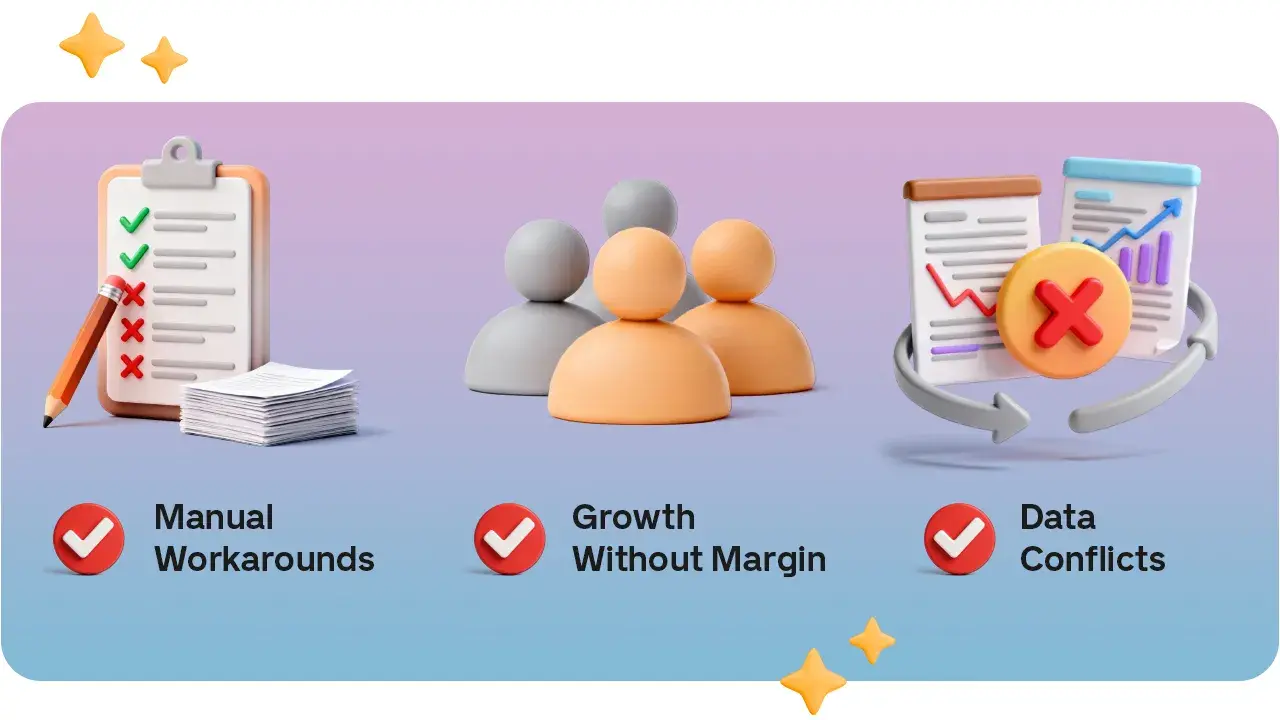
Heavy manual workarounds. Copy-pasting order data, updating inventory by hand, or re-entering shipping details often point to processes that need rethinking.
-
Growth without margin. If new customers bring new headcount in equal measure, profitability never improves.
Conflicting data. When different tools produce different numbers, leadership lacks the visibility to make confident decisions.
Why It Happens to the Best PSPs
The key message: this can happen to anyone. As Rick Bellamy noted, most PSPs didn’t choose poorly — they chose tools that were right at the time.
The challenge is that:
-
The tools didn’t evolve as fast as customer demands.
-
New requirements were layered on top rather than integrated.
-
Stopgaps became part of the core system.
Complexity is not a sign of failure. It’s the byproduct of adapting to change without the luxury of starting from scratch.
Practical Ways to Simplify
From Episode 1, here are practical approaches PSPs are using to get unstuck:
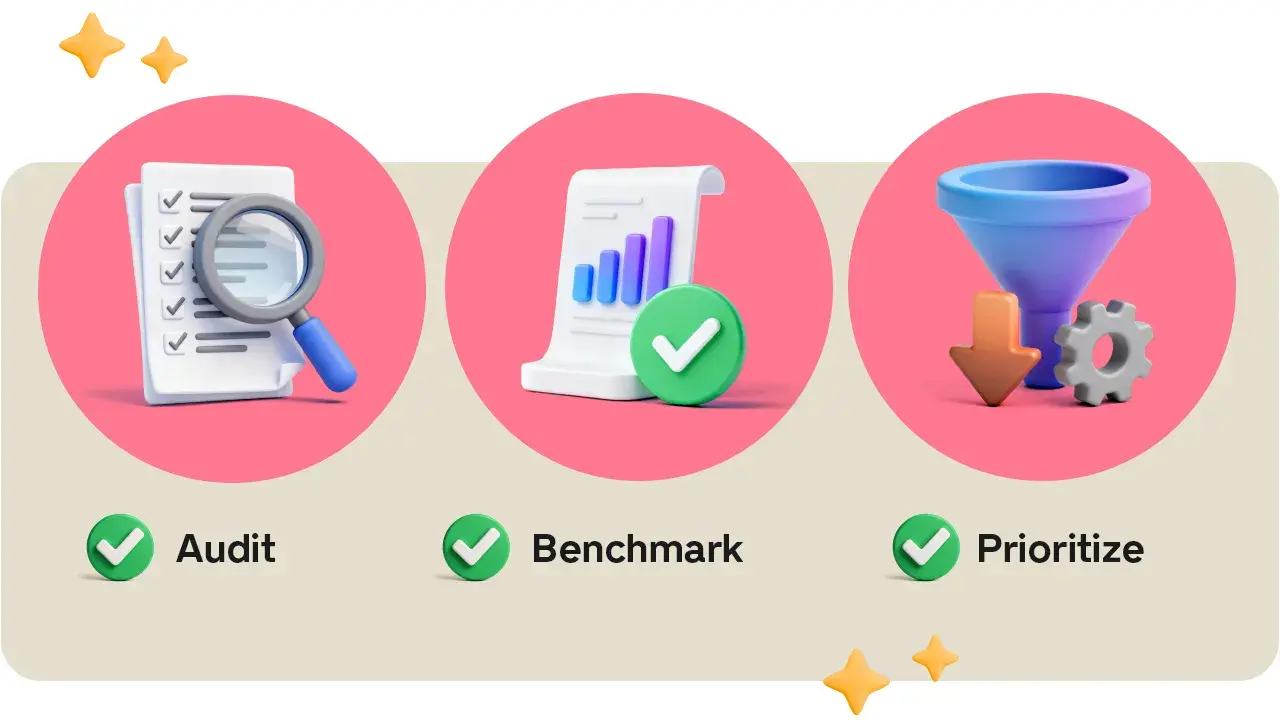
1. Audit Your Stack
Map every tool in use — MIS, workflow, prepress, shipping, inventory, web-to-print, spreadsheets. Identify where duplication or handoffs exist.
This often reveals hidden costs: unused licenses, duplicate subscriptions, or staff spending hundreds of hours maintaining manual processes.
2. Benchmark Against Best Practice
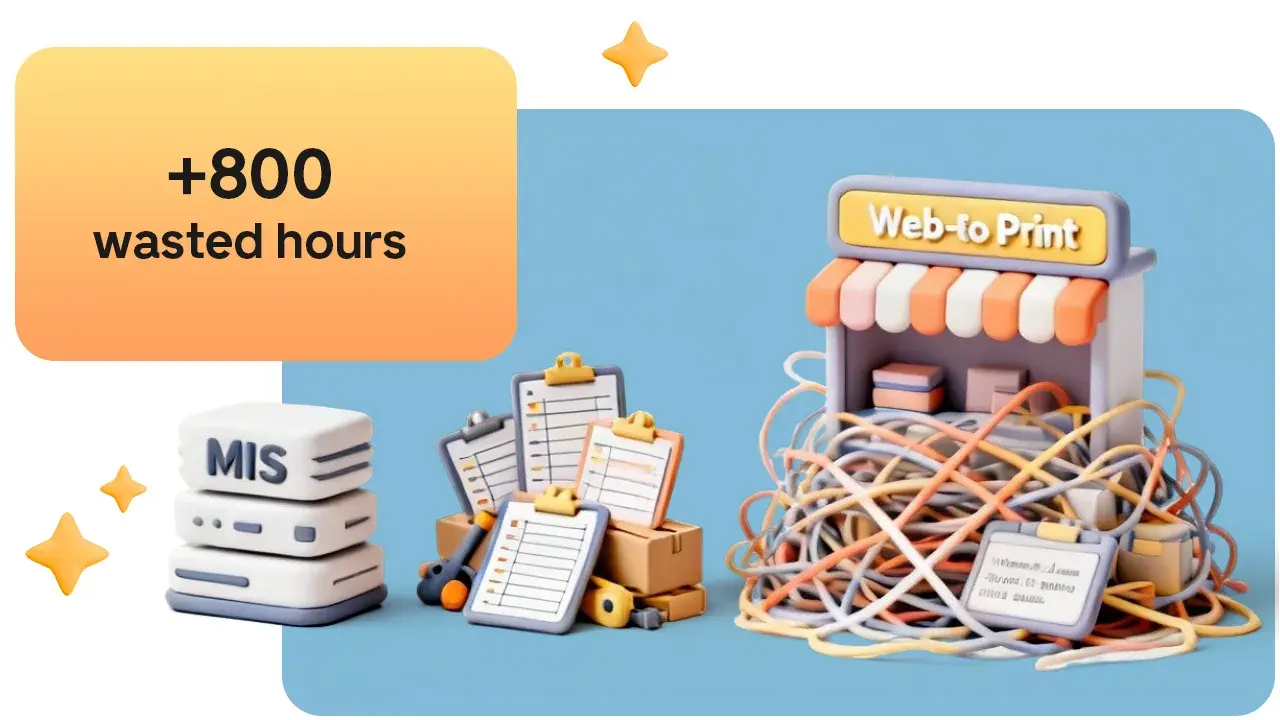
Compare your workflows to peers. One PSP discovered they were entering the same job three times — in storefront, MIS, and billing. When analyzed, this added up to 800 wasted hours per year.
3. Prioritize the Bottleneck
Change doesn’t need to be all at once. Focus first on the area creating the most friction — whether that’s order intake, shipping, or inventory management.
A Real PSP Story
Consider a PSP that invested in a solid MIS five years ago. It worked well for estimating and managing traditional jobs. But as e-commerce orders grew:
-
They added spreadsheets for inventory.
-
They bolted on multiple shipping tools for different clients.
-
Web-to-print storefronts came online, but staff had to re-enter every order.
What began as strong foundations became a tangled web of tools. Staff were rekeying data, manually updating job statuses, and reconciling invoices. The result: hundreds of wasted hours and frustrated teams.
The Bigger Industry Shift
This isn’t just an individual PSP problem. It reflects a larger industry transition:
-
Average print runs shrinking from 3,000+ to fewer than 30 micro-orders.
-
More tools layered into workflows, each solving a piece of the puzzle.
-
Higher expectations from e-commerce, aggregators, and brands.
As Rick noted:
“Great companies today are a rare combination of high service and high technology. But operations still feel messy when workflows multiply and systems don’t connect.”
Takeaway: Complexity Is Common, But Manageable
The Tech Stack Trap isn’t about mistakes or poor leadership. It’s about the natural friction of growth.
The good news is that complexity can be managed. By auditing current tools, identifying duplication, and addressing the biggest pain points first, PSPs can begin to simplify and regain control.
Complexity may be common, but it doesn’t have to define the future.
Our “Print Software Red Flag Checklist” helps you audit your current stack, spot the most common failure points, and ask the right questions before adding new tools.

-2-1024_1024_download3-2.webpgbvp.webp)