Print estimating has historically been the industry's Achilles heel. Slow, manual, and dependent on a handful of experienced experts, traditional estimating creates bottlenecks that delay customer responses, risk losing opportunities, and produce inconsistent pricing that erodes margins. In 2025, AI-powered print estimating software is fundamentally transforming this critical business function, delivering estimates in seconds rather than hours and enabling even junior staff to generate accurate, profitable quotes.
The commercial impact proves substantial. Print businesses implementing AI estimating report quote generation times dropping from lengthy manual processes to near-instantaneous initial estimates and minutes for customer-ready branded quotes. Manual quoting work decreases by half or more, freeing estimators to focus on complex custom work and strategic pricing rather than routine calculations. Win rates improve substantially as faster responses capture opportunities that slower competitors miss.According to industry research, over a third of commercial printers already use AI tools, with estimating and operations representing primary implementation areas. The web-to-print market, valued at tens of billions and growing steadily annually, increasingly expects instant online quoting capabilities that only AI can deliver cost-effectively. Print businesses without AI estimating risk competitive disadvantage as customer expectations shift toward immediate responses and transparent pricing.
How AI-powered print estimating works
AI-powered print estimating systems leverage machine learning algorithms, vast databases of production parameters, and real-time market data to generate accurate estimates with unprecedented speed and consistency.
Core technology components include machine learning models trained on extensive historical print jobs, analyzing relationships between job specifications, production methods, material costs, labor requirements, and final pricing. Production optimization engines that evaluate numerous potential production paths simultaneously, identifying the most cost-effective approach for each job. Real-time pricing databases continuously updated with current costs for materials, labor, overhead, and market rates. Integration APIs that connect with existing MIS systems, equipment, and business software to access production capabilities and constraints.
Data inputs and processing begin when users describe job requirements through natural language prompts, structured forms, or data imports. The system analyzes specifications including quantity, size, substrate type, colors, finishing requirements, turnaround time, and delivery location. AI algorithms instantly evaluate production options considering available equipment capabilities, current production schedules, material inventory levels, labor availability, and historical performance data. The system generates detailed cost breakdowns covering materials, labor, equipment time, overhead allocation, finishing operations, and delivery logistics.
Intelligent optimization capabilities distinguish AI estimating from traditional calculation tools. Rather than simply computing costs for a single production method, AI systems evaluate thousands of possible production path combinations, identifying approaches that maximize profitability while meeting customer requirements. This optimization occurs in seconds, leveraging processing power impossible for human estimators.
Accuracy and consistency advantages emerge from AI's ability to incorporate vastly more variables than manual estimating. Human estimators necessarily simplify calculations, using rules of thumb and averages that introduce variability. AI systems account for precise current material costs, actual equipment speeds and capacities, historical waste rates by substrate and process, seasonally adjusted labor costs, and market-based pricing intelligence. This granularity produces estimates matching or exceeding experienced estimator accuracy while eliminating inconsistency between different staff members.
Continuous learning and improvement represents perhaps AI's most powerful advantage. Traditional estimating systems remain static until manually updated. AI systems continuously learn from actual production results, comparing estimates to final costs and adjusting algorithms to improve accuracy. As production methods evolve, equipment capabilities change, and market conditions shift, AI adapts automatically without requiring manual reconfiguration. This ensures estimates remain accurate and optimized over time rather than becoming increasingly outdated.

Business benefits of AI estimating software
The commercial case for AI-powered print estimating rests on transformative improvements across sales effectiveness, operational efficiency, and profitability.
Dramatically faster quote response times provide immediate competitive advantage. GelatoConnect's AI Estimator generates precise estimates in seconds and delivers branded, customer-ready quotes in minutes, compared to lengthy timeframes for traditional estimating. This speed enables same-day or even instant responses that capture opportunities before customers contact competitors. One commercial printer reported generating quotes almost instantly through simple prompts. This responsiveness transforms customer experience and significantly improves win rates.
Increased sales conversion and revenue flows directly from faster, more accessible quoting. Print businesses report substantial improvements in quote-to-order conversion rates after implementing AI estimating. The ability to provide instant quotes through website self-service interfaces removes friction from the buying process, enabling customers to get pricing around the clock without email exchanges or phone calls. As one print company CEO noted, AI estimating eliminates traditional buying barriers, enabling customers to get instant quotes through simple descriptions, driving growth through improved simplicity.
Improved margin consistency and profitability emerges from AI's optimization capabilities and elimination of human error. Traditional estimating produces pricing variability depending on which estimator handles each job, time pressure, and individual judgment about production methods. AI generates consistent, optimized pricing for every job, ensuring margins align with business targets. One print service provider implementing AI estimating reported a sustained period of margin improvement, attributing success to accurate pricing and estimator confidence.
Significant labor cost reduction results from automating routine estimating work. Manual estimating consumes substantial staff time weekly for small print shops and considerably more for larger operations. AI systems reduce this workload by half or more, freeing experienced estimators to focus on complex custom jobs, strategic pricing analysis, and customer consultations that deliver higher value. Industry research shows that AI-powered estimating simplifies the process for wider range of users, enabling junior staff to generate professional quotes that traditionally required senior expertise.
Enhanced customer experience and satisfaction transforms buyer relationships through transparency and accessibility. Customers receive detailed, professional quotes quickly and can easily understand cost components. Self-service quoting portals empower buyers to explore options and pricing without waiting for sales responses. Real-time updates as specifications change help customers optimize their projects within budget. This improved experience drives repeat business and referrals.
Scalability without proportional cost increase enables growth that traditional estimating cannot support. Adding capacity in manual estimating requires hiring expensive expert estimators (often difficult in tight labor markets) or overwhelming existing staff. AI estimating scales nearly infinitely without additional labor. A small shop can handle large enterprise requests requiring numerous line items in the same timeframe as simple jobs. This capability opens markets and customer segments previously inaccessible due to estimating capacity constraints.
Competitive positioning and market differentiation increasingly depends on quoting capabilities. Print buyers, especially younger, digitally-native decision-makers, expect instant online pricing similar to other industries. Businesses offering AI-powered instant quotes differentiate dramatically from competitors requiring email exchanges and lengthy turnaround. This modern, responsive approach attracts customers who value efficiency and positions print businesses as technology leaders rather than traditional, slow-moving suppliers.
The State of Intelligent Print Production 2026
Benchmarks, trends and AI strategies from the world's leading print operations — see what's driving growth in 2026.
Download the report →Key features and capabilities
Leading AI-powered print estimating systems offer comprehensive feature sets that address diverse business needs and operational requirements.
Natural language processing and input flexibility enables estimators to describe jobs conversationally rather than filling complex forms. Users can copy-paste customer emails, type descriptions naturally, or upload specification files. The AI interprets requirements, asks clarifying questions about ambiguous elements, and suggests options for unspecified parameters. This natural interaction dramatically reduces data entry time and learning curves.
Multi-path production analysis represents core AI value. The system simultaneously evaluates numerous production scenarios including different equipment combinations, varied material substrates meeting specifications, alternative finishing workflows, and diverse timing options. For each scenario, AI calculates complete costs, estimates production time, assesses current equipment availability, and determines final pricing. The estimator receives recommendations for most profitable approach while maintaining visibility into alternatives for specific customer requirements or constraints.
Real-time pricing data integration ensures estimates reflect current market conditions rather than outdated information. The system continuously updates material costs from supplier price lists, labor rates from HR systems, equipment operation costs from maintenance tracking, overhead allocations from accounting, and market pricing from competitive intelligence. Some systems incorporate economic indicators, adjusting for inflation, supply chain disruptions, and seasonal demand patterns. This real-time accuracy prevents costly underpricing from outdated assumptions.
Template libraries and job replication streamline estimating for recurring work. Estimators create templates for common products or customer-specific repeat jobs, capturing all specifications, production methods, and pricing parameters. New quotes for similar work start from templates, requiring only quantity or minor specification adjustments. This capability proves particularly valuable for businesses with standardized product offerings or large customers with consistent requirements. One commercial printer noted that templates ensure consistency and efficiency in the estimating process.
Comprehensive cost breakdown and reporting provides transparency supporting both customer communications and internal analysis. AI systems generate detailed itemizations showing material costs, labor by production stage, equipment time and costs, finishing operations, delivery expenses, overhead allocation, and margin calculations. This transparency helps justify pricing to customers, enables identification of cost reduction opportunities, supports profitability analysis by job type or customer, and facilitates strategic pricing decisions.
Web-based customer quoting portals extend AI estimating directly to customers, enabling true self-service. Print businesses embed estimating engines into websites where customers describe requirements, receive instant quotes, modify specifications to see pricing impact, and submit orders without sales team involvement. This capability transforms the buying experience while freeing sales teams from routine quoting work. GelatoConnect's AI Estimator can be embedded directly into print provider websites for seamless customer access.
MIS and workflow integration ensures AI estimating connects seamlessly with broader production management. Estimates automatically convert to jobs upon order confirmation, production specifications flow to equipment scheduling, material requirements update inventory systems, and actual costs feed back to improve future estimates. This integration eliminates double data entry, reduces errors, and creates closed-loop systems that continuously improve accuracy.
Mobile accessibility and flexibility enables estimating from any location using smartphones or tablets. Sales representatives can generate quotes during customer meetings, remote estimators access systems from home, and owners monitor quoting activity from any device. Cloud-based deployment typically ensures latest updates and pricing data availability without local software management.
Frequently asked questions
What is AI-powered print estimating software?
AI-powered print estimating software uses artificial intelligence and machine learning to automatically generate accurate cost estimates and quotes for print jobs. Unlike traditional estimating tools that simply calculate based on manually entered parameters, AI systems analyze job specifications, evaluate multiple production scenarios, optimize for profitability, and deliver estimates in seconds rather than hours. Leading solutions like GelatoConnect's AI Estimator can generate estimates almost instantly and customer-ready quotes in minutes.
How much does AI print estimating software cost?
Costs vary widely based on capabilities and business size. Entry-level AI estimating tools start with modest monthly subscription pricing. Mid-market solutions typically cost more with advanced features and higher volume capacity. Enterprise systems require substantial monthly investment with comprehensive integration, unlimited users, and advanced analytics. Most vendors offer tiered pricing scaled to business size and free trials for evaluation. Focus on ROI rather than upfront cost, as most implementations pay for themselves within the first year through improved efficiency and win rates.
How accurate is AI estimating compared to experienced estimators?
AI estimating accuracy typically matches or exceeds experienced human estimators for routine jobs while delivering consistency that humans cannot maintain. AI analyzes more variables (hundreds or thousands of parameters) and accounts for real-time costs that humans simplify. The key advantages are consistency across all estimates, continuous improvement through machine learning, and elimination of calculation errors or outdated assumptions. For highly unusual custom jobs, human expertise still adds value in guiding AI with proper context and reviewing outputs. The optimal approach combines AI speed and consistency with human oversight for quality and edge cases.
Can small printing businesses benefit from AI estimating?
Absolutely. Small businesses often gain proportionally greater benefits than larger operations because estimating bottlenecks constrain growth more severely when staff is limited, they can't afford expensive senior estimators, consistency matters more when fewer staff handle quoting, and competitive differentiation through instant quotes levels playing field against larger competitors. Cloud-based AI estimating solutions require minimal IT infrastructure, making them accessible to businesses of all sizes. Subscription pricing puts powerful AI capabilities within reach of even small shops.
Will AI estimating work with my existing MIS system?
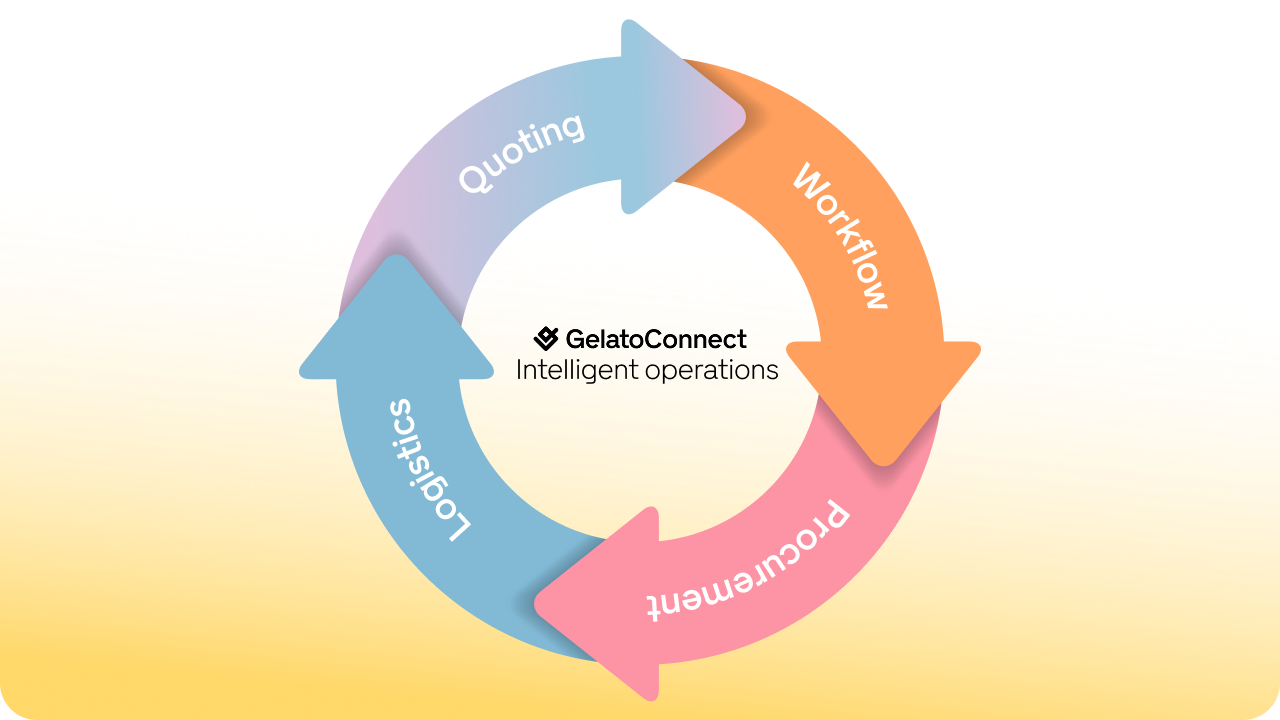
Modern AI estimating solutions typically offer integration options with common print MIS systems through APIs, data imports/exports, web services, and custom integrations. Solutions like GelatoConnect provide comprehensive integration across procurement, workflow, and logistics systems. During vendor evaluation, specifically discuss integration capabilities with your existing systems. Even if full integration isn't immediately possible, many businesses successfully use AI estimating as frontend tool that generates estimates manually transferred to legacy systems while planning longer-term modernization.
How long does it take to implement AI estimating software?
Implementation timelines vary from one week for simple cloud-based solutions to several months for comprehensive systems with extensive integration and customization. Typical implementation for mid-market solution involves a few weeks for initial setup and configuration, a couple weeks for data migration and training, several weeks for parallel operation and validation, and additional time for full deployment and optimization. Total implementation time typically spans several weeks to a few months. Vendors like GelatoConnect provide implementation support to accelerate deployment and ensure success.
What training is required for staff to use AI estimating?
AI estimating systems designed for print industry typically require minimal training due to intuitive interfaces. Most users become proficient within days of training and practice. Key training areas include basic system navigation and job entry, natural language prompt engineering for best results, interpreting AI recommendations and cost breakdowns, when to accept AI suggestions versus applying judgment, and leveraging templates and saved configurations. Ongoing support and occasional refresher training help users master advanced features over time. The goal is liberating estimators from calculation drudgery, not creating new technical burden.
Can customers use AI estimating to get instant quotes from our website?
Yes, this represents one of AI estimating's most valuable capabilities. Leading solutions like GelatoConnect's AI Estimator can be embedded directly into print provider websites, enabling customers to describe requirements, receive instant accurate quotes, modify specifications to see pricing changes, and submit orders without requiring sales team involvement. This self-service capability dramatically improves customer experience, captures opportunities around the clock, and frees sales teams from routine quoting to focus on consultative selling and relationship building. Businesses report substantial improvements in quote-to-order conversion rates with customer-facing AI quoting.
How does AI estimating handle custom or unusual jobs?
AI estimating excels at routine jobs within established parameters but requires human guidance for highly unusual custom work. Most systems allow manual override of AI recommendations, flagging unusual specifications for estimator review, learning from corrections to handle similar jobs better next time, and hybrid workflows combining AI speed for standard components with human expertise for custom elements. Even for unusual jobs, AI handles routine calculations and data retrieval, freeing estimators to focus expertise on truly unique aspects. The optimal approach leverages AI for what it does best while maintaining human judgment for edge cases.
What's the ROI timeline for AI print estimating software?
Most print businesses achieve positive ROI within the first year through combination of increased sales win rates from faster responses, reduced estimating labor costs, improved pricing consistency and margins, and expanded sales capacity without additional staff. High-volume operations often see payback even faster. The specific ROI depends on current estimating volume, existing efficiency, and how comprehensively the business leverages AI capabilities. Beyond direct financial ROI, competitive positioning benefits and customer experience improvements deliver ongoing strategic value.
Ready to transform your estimating process with AI? Discover GelatoConnect's AI Estimator, the print industry's first AI-powered quoting engine that delivers estimates in seconds and cuts manual work by half. Try it today and see how AI revolutionizes print estimating.
Ready to quote faster and win more jobs?
GelatoConnect Estimator generates accurate print quotes in 15 seconds — trained on millions of real transactions. PSPs using it see up to 2x win rates and 65% less manual quoting work.