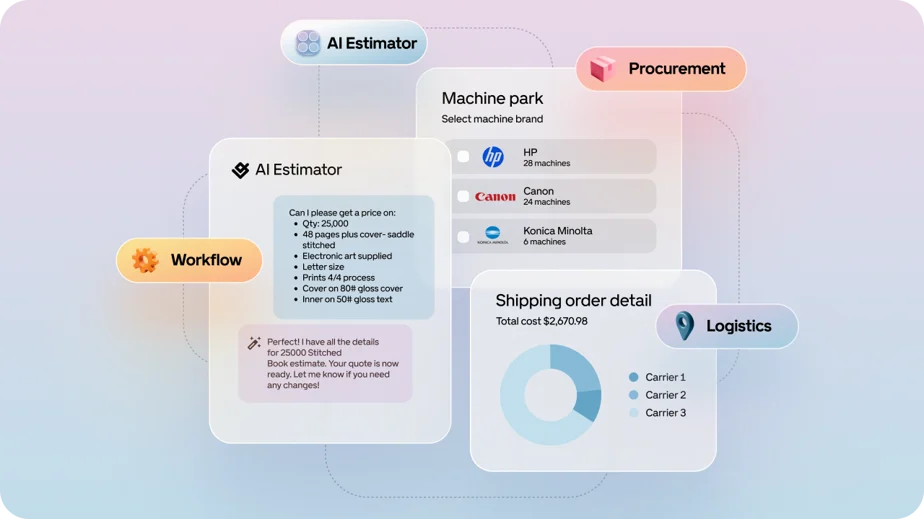
The Four Pillars of Intelligent Print Production
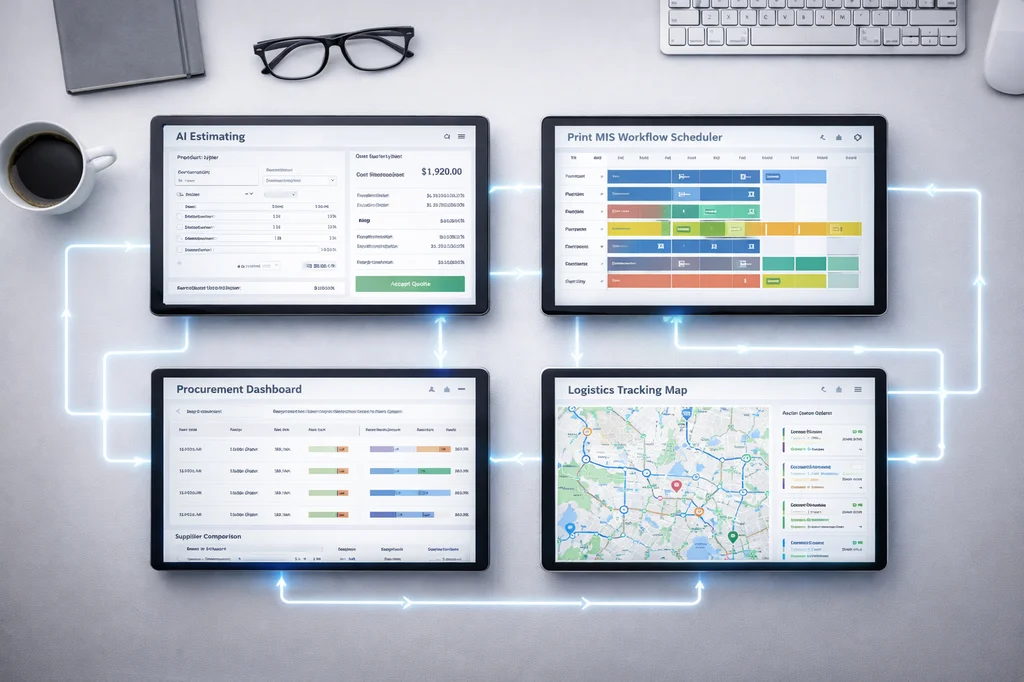
Intelligent print production is built on four operational capabilities that work together as a system.
Key Takeaways
- The Four Pillars of Intelligent Print Production: Intelligent print production is built on four operational capabilities that work together as a system.
These pillars describe how intelligence shows up in day-to-day operations, from quoting and production flow to procurement and fulfillment. Most PSPs already have elements of this in place. Few have connected them in a way that compounds value over time.
Below is a practical breakdown of each pillar, what it enables, and why it matters operationally.
Pillar 1: Quoting Intelligence
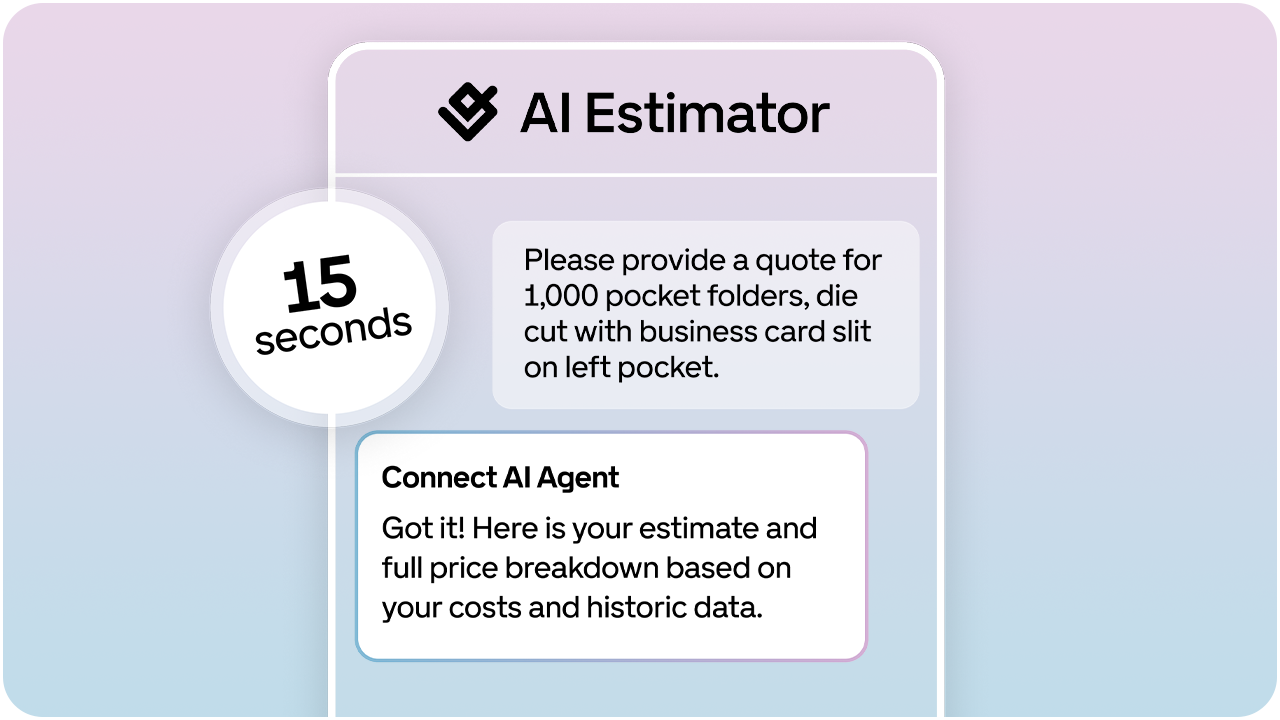 Quoting is where operational performance and margin are first set.
In many print operations, quoting still depends on manual inputs, static rules, and individual experience. Speed and accuracy vary based on who is available rather than what the operation can actually deliver.
Quoting intelligence changes this by learning from historical jobs, real production outcomes, and live capacity. It adapts pricing rules for specific customers to optimize margin, while handling complexity across any print method or job type. Quotes are generated faster and reflect true cost, real constraints, and margin expectations.
The result is not just quicker responses. It is better decisions at the entry point of the operation that shape production, procurement, and delivery downstream while protecting profitability.
Pillar 2: Workflow Intelligence
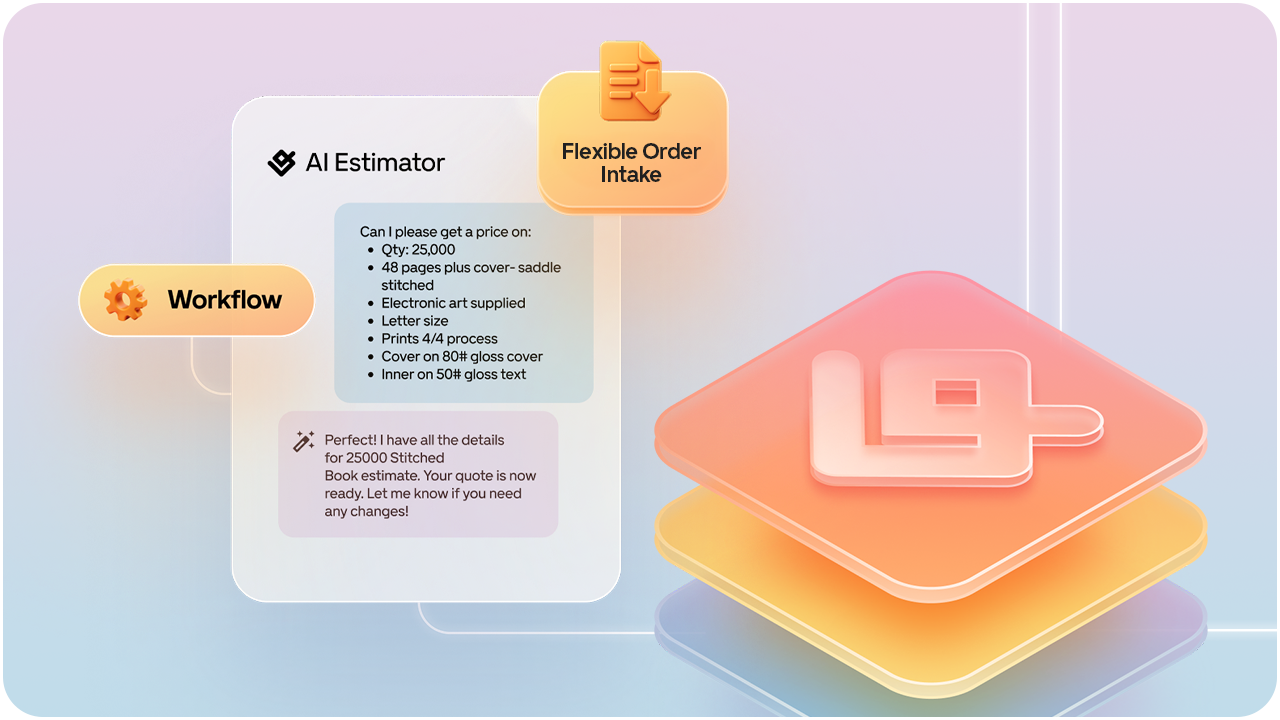 Workflow intelligence focuses on how work moves through the operation, directly impacting margin through increased throughput and waste elimination.
Many PSPs have digital job tracking. Workflow intelligence goes further by continuously adjusting routing based on capacity, bottlenecks, and priorities.
Production decisions adapt in real time. Bottlenecks are identified and addressed earlier. Machine utilization improves without adding headcount.
Workflow intelligence also generates reliable production signals that inform quoting forecasts, material planning, and delivery decisions, creating a virtuous cycle across the entire operation.
Pillar 3: Procurement Intelligence
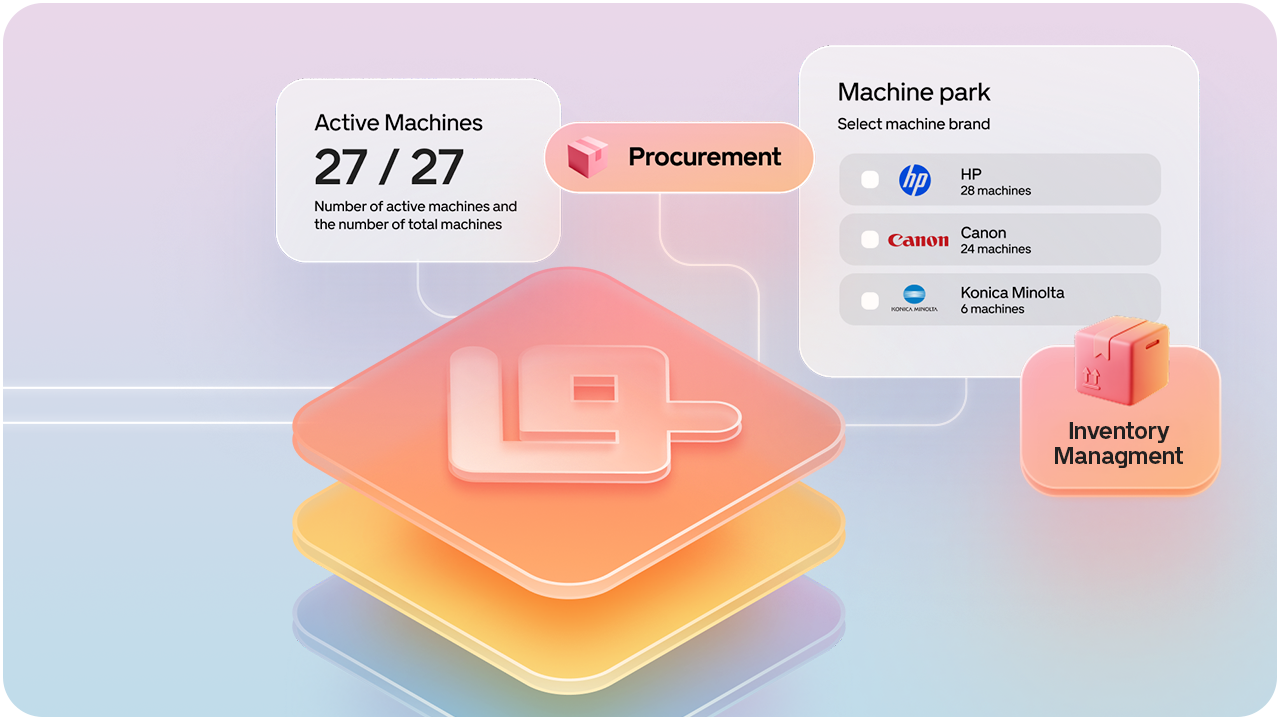 Procurement intelligence addresses one of the most persistent sources of operational friction. Without intelligence, inventory planning is reactive. Materials are overstocked to reduce risk, while shortages still disrupt production.
Procurement intelligence predicts material needs using quoting forecasts, workflow schedules, and historical consumption. The system automatically orders replenishment at optimal timing based on configurable stock thresholds and real-time usage data. Inventory levels fall while availability improves.
This reduces tied-up capital and eliminates much of the firefighting that slows operations down.
Pillar 4: Logistics Intelligence
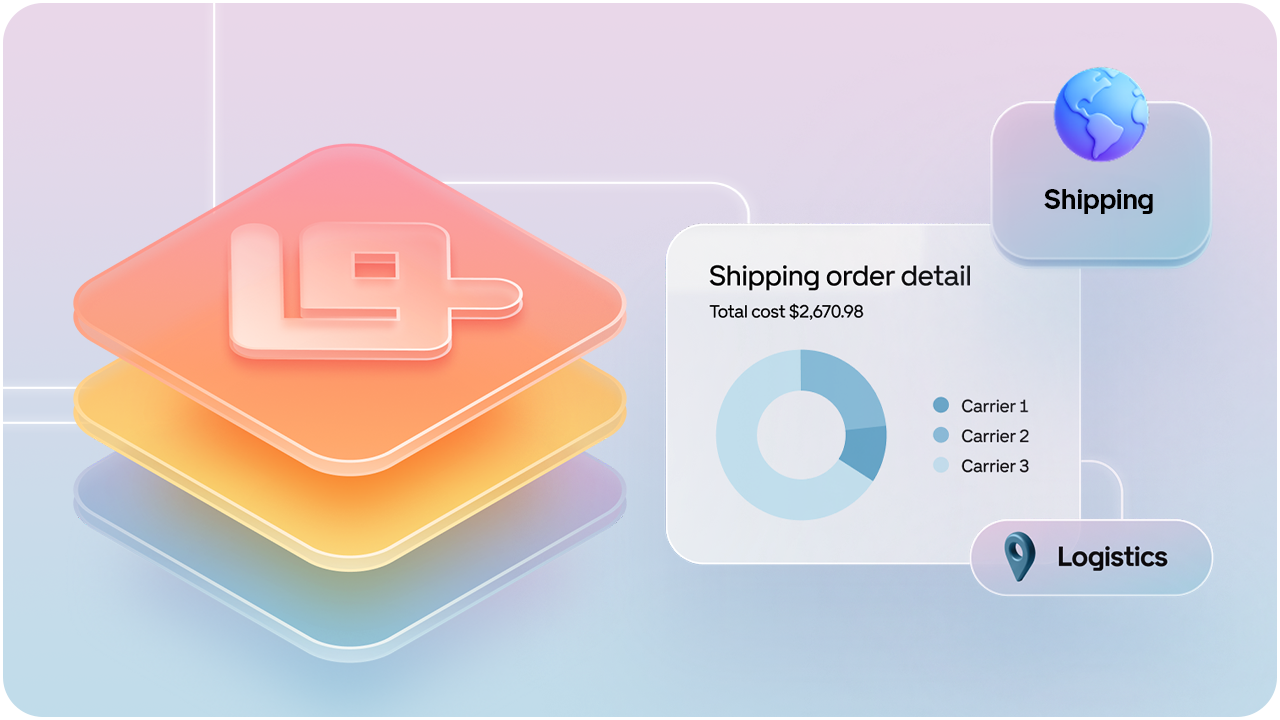 Logistics intelligence optimizes how orders are fulfilled.
Instead of relying on fixed rules or manual comparisons, intelligent logistics selects carriers and routes based on cost, speed, and reliability for each order.
Delivery performance data feeds back into quoting and routing decisions, improving accuracy across the operation. Shipping costs decline while dispatch reliability improves.
How the Pillars Work Together
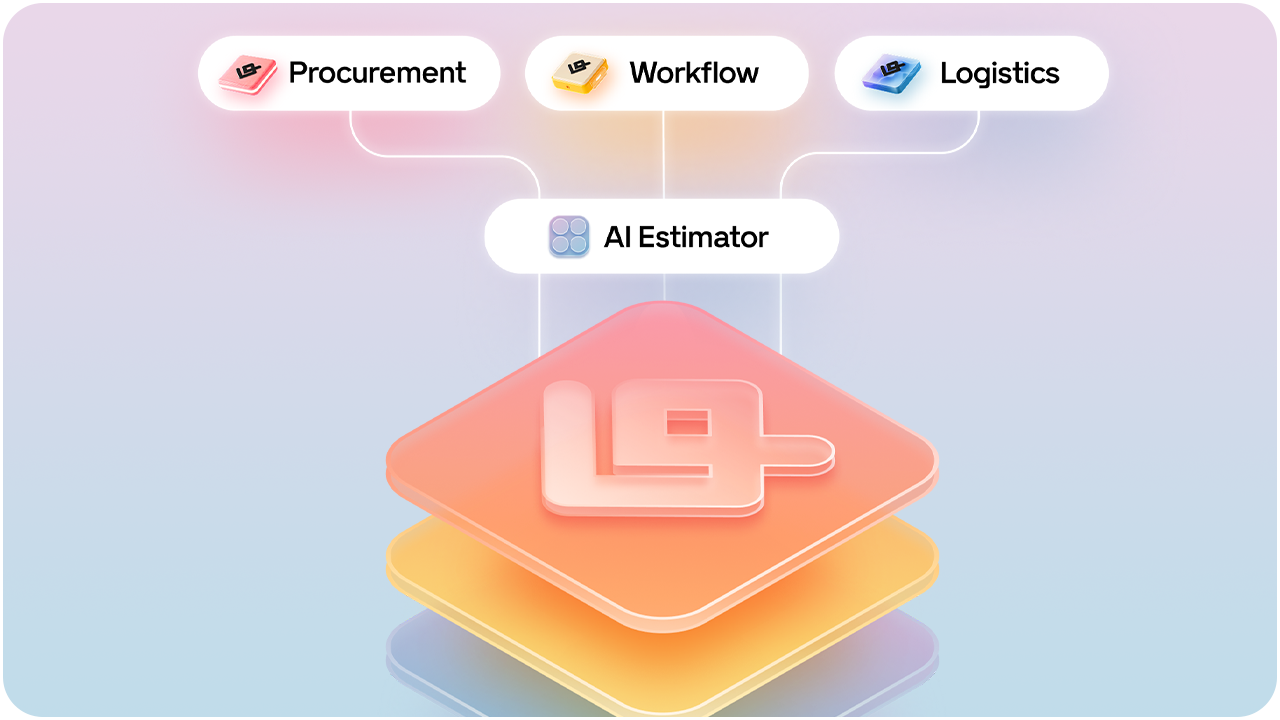 The four pillars create value through connection.
Quoting sets expectations using real operational data. Workflow executes and adapts based on live conditions. Procurement ensures materials arrive when needed. Logistics completes fulfillment and feeds outcomes back into the system.
Each job improves the next decision. Intelligence compounds over time.
Where Most PSPs Start
Most PSPs do not build all four pillars at once.
In practice:
- Most begin with quoting intelligence
- Many progress to workflow optimization
- Few have mature procurement and logistics intelligence fully integrated
The right starting point depends on where operational friction is highest today.
Turning Insight Into Action
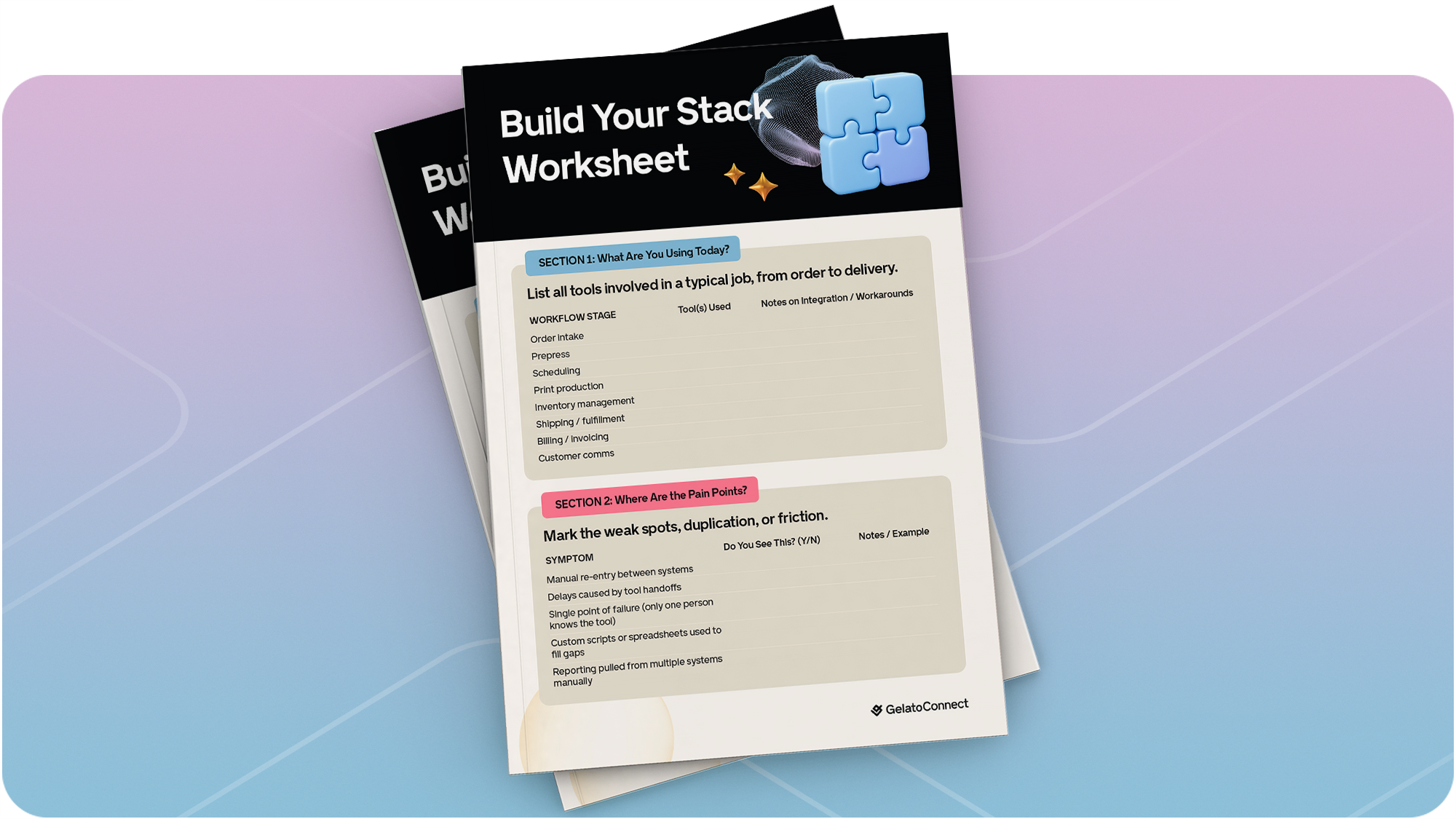 Understanding the four pillars only matters if it leads to change.
That is why we created the Unjammed Software worksheets. These are practical working documents designed to help teams identify friction, map disconnected systems, and see where intelligence will create the most leverage.
The worksheets help teams:
- Surface manual work slowing operations
- Identify where data is fragmented
- Prioritize which pillar to address first
They are designed for operations, production, and commercial teams to use together.
Download the Unjammed Software Worksheets (PDF file)
Already thinking about where to start? Find your Intelligence Score.
Ready to automate your print production?
GelatoConnect Workflow connects your presses, pre-press, and finishing into one automated production system — with operator-guided workflows, intelligent batching, and less than 0.35% error rates.
Frequently Asked Questions
What is the four pillars of intelligent print production and why does it matter for print businesses?
Intelligent print production is built on four operational capabilities that work together as a system. These pillars describe how intelligence shows up in day-to-day operations, from quoting and production flow to procurement and fulfillment.
How does GelatoConnect help print businesses address these challenges?
GelatoConnect is an AI-powered operating system for digital print production that unifies procurement, workflow, and logistics in one connected platform. It replaces the five or more disconnected systems most print businesses rely on — delivering up to 40% lower shipping costs, 5-20% lower material costs, and 25-100% growth without extra hiring. Customers like ESP Colour doubled their profit margin in the first year, and TidyMerch grew from €500K to €2M revenue with zero new staff or machines.
Recent Posts

Keep your MIS. Upgrade your quoting. The best AI print quoting software in 2026 is not a faster...
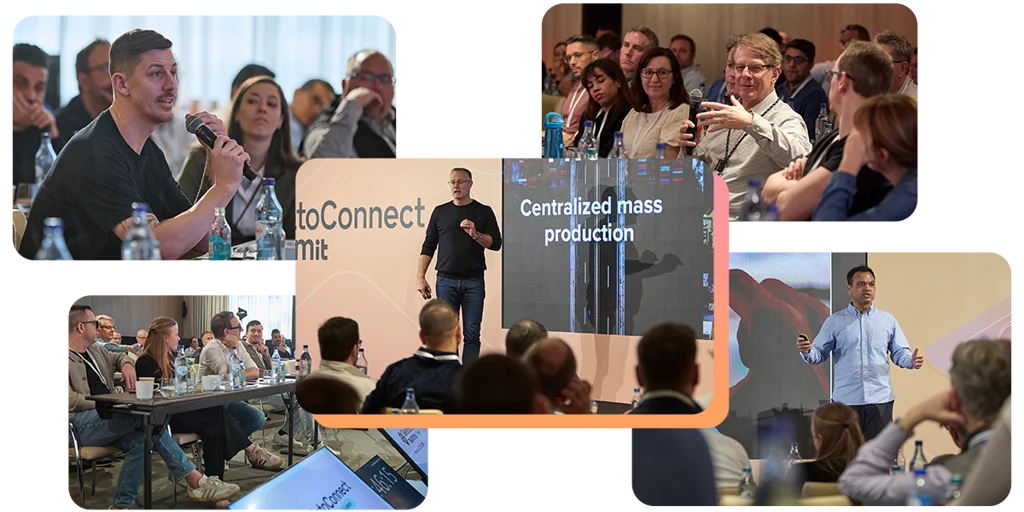

Inside GelatoConnect Summit 2026 in Lisbon In February, print operators from the US, Europe,...
The software running your print shop's management functions has more influence over your...